
November 27, 2026
Milton Castillo brings Panama’s Bitcoin circular economy vision to Satoshi Team
The Panama Bitcoin collaborator, Panamá Soberano cofounder and Bitcoin Day 2026 speaker discusses education, the Vía Bitcoin proposal and his vision for adoption built through community.
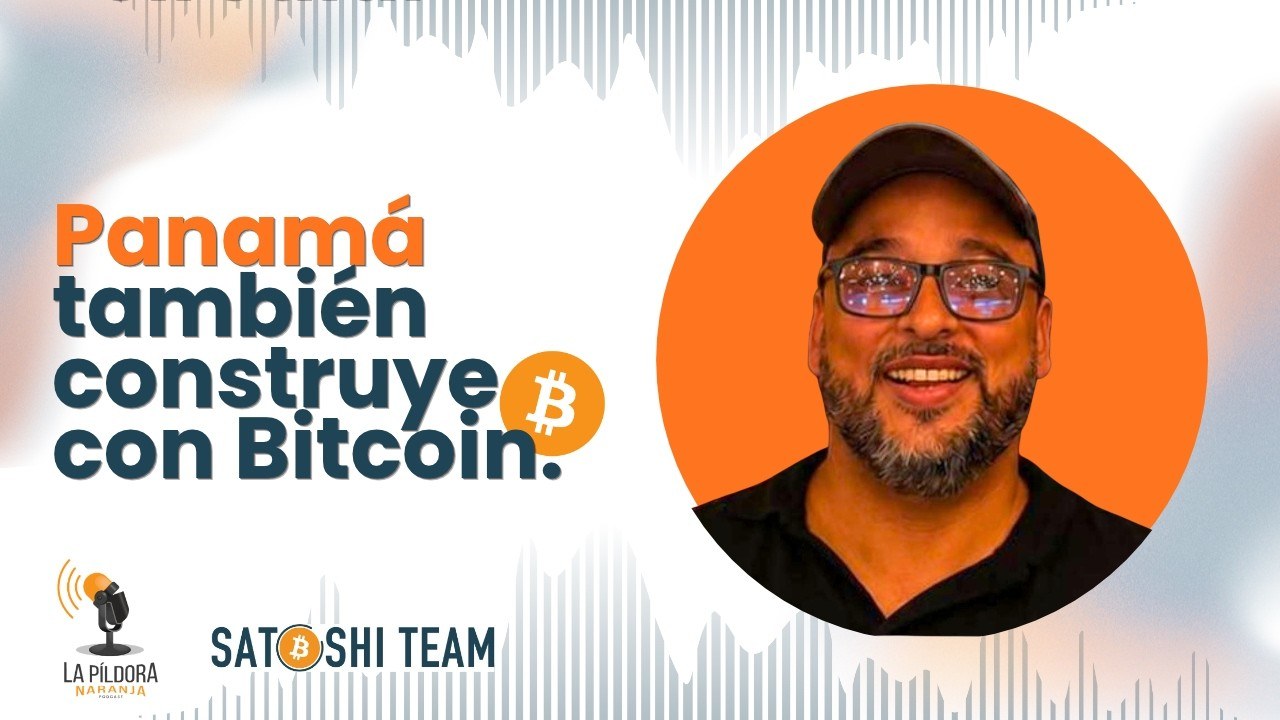
Milton Castillo Arosemena, a lawyer, Panama Bitcoin collaborator and cofounder of Panamá Soberano, brought a practical proposal for Bitcoin adoption to La Píldora Naranja, the programme produced by Colombia's Satoshi Team: learn to hold your own bitcoin, use it in everyday life and build communities where payments can circulate between people and businesses. The conversation with Yojana Rojas, streamed on November 26, 2026, explores both his personal journey and the work he is developing in Panama City.
For Panama Bitcoin, the interview puts a spotlight on one of the voices promoting Bitcoin education and circular economies in the country. His contribution is clearest in the details: speaking with merchants who already know him, trying tools before recommending them and finding a neighbourhood where adoption can develop consistently.
From Bitcoin Day Panama to a regional conversation
His appearance on Satoshi Team continues work he has also shared on stages in Panama. Milton was a speaker on the “Bitcoin Circular Economies & Communities” panel at Bitcoin Day Panama 2026, held on April 16 at Emotions Theater, Hilton Panama. He joined Jordi Llonch-Esteve and Valentin Popescu, with Nina Herrera as moderator. The official programme and Panamá Soberano's event recap document that participation.
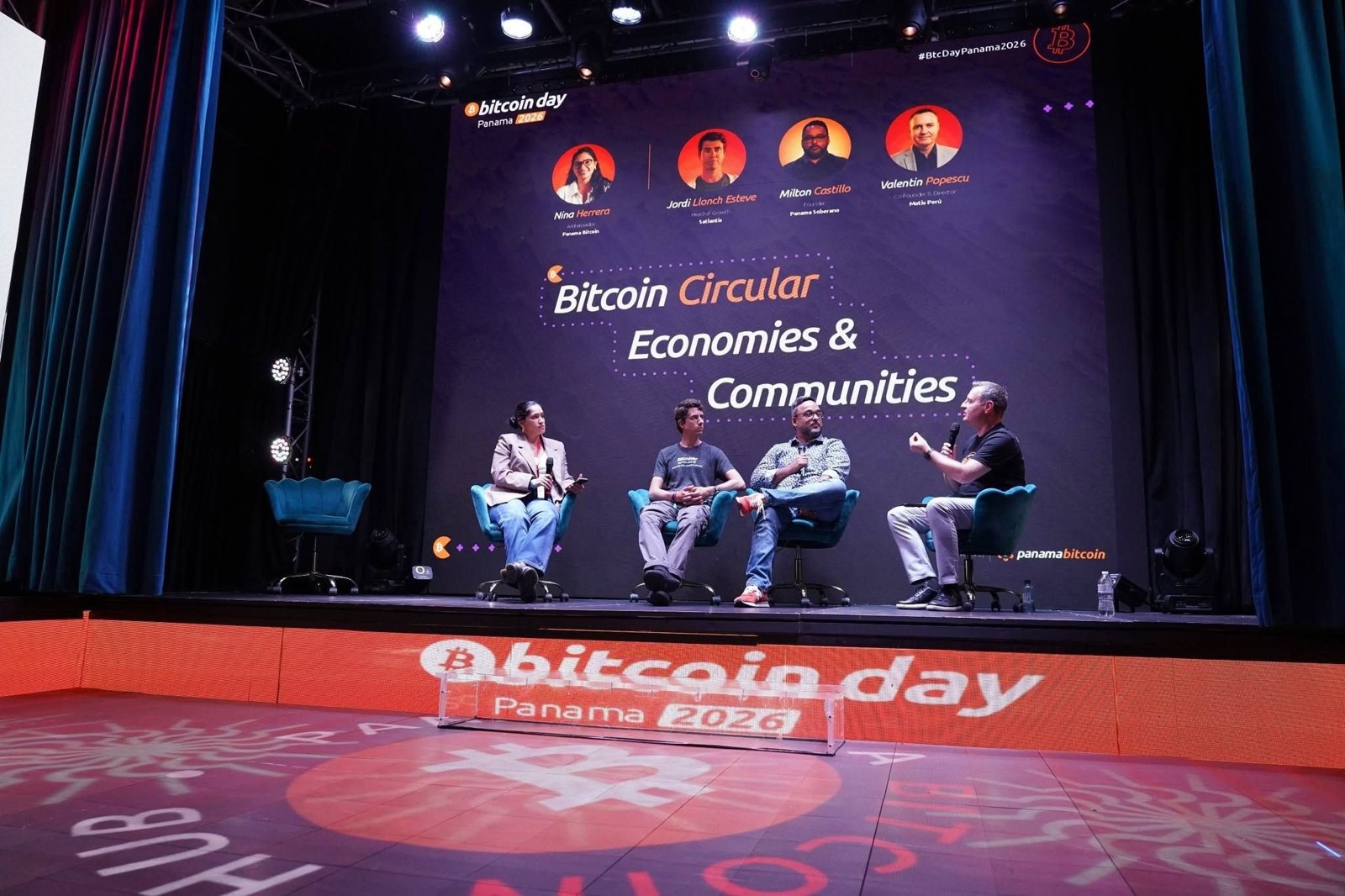
Panel photograph: Panamá Soberano.
His collaboration with Panama Bitcoin also has a concrete example: our November 19 edition published his report and the photographs he supplied from El Zonte, El Salvador. The interview with the Colombian team brings that experience to another Latin American community.
From searching for a store of value to Panamá Soberano
Castillo said he began studying gold and silver between 2018 and 2019. He wanted to preserve the value of his work, but also recognised the practical difficulties of storing physical metals and depending on third parties to hold them. When he discovered Bitcoin in 2021, he found a technology he wanted to study for its possibilities for self-custody and digital transfers.
That learning became a shared project. In the podcast, he explained that Panamá Soberano started in 2021 with Juan Carlos Ceballos, with whom he exchanged discoveries about wallets, payments and security. The episode's official description dates the initiative's beginning to August of that year. Both wanted to share that knowledge and help other people use Bitcoin.
Milton described Panamá Soberano as a volunteer movement. Its members undertake this work alongside their own jobs and, he explained, hope to develop its organisation further. Its name expresses his understanding of personal sovereignty: having control of one's resources and accepting responsibility for deciding how to use them.
The four pillars of his approach
During the interview, Castillo organised Panamá Soberano's work around four pillars: education, community, technological experimentation and adoption through circular economies.
Education starts with basic questions about money, Bitcoin and wallets. Community allows people to compare what they have learned with real experiences. Experimentation helps them understand tools and their limitations. A circular economy is the aspiration for people, families and businesses to receive, save and spend bitcoin within a network of exchanges.
Milton argued that understanding the technology should go hand in hand with opportunities to use it. He described a cycle in which someone buys bitcoin, saves some, spends some and can replace what they have spent. He wants the money to circulate and serve a purpose within the community, as well as being held for the future.
Trust opens merchants' doors
One of the most useful parts of the episode was his explanation of how to approach a business. Castillo said that discussing Bitcoin with strangers can meet resistance, whereas starting with people who already trust him has made those conversations easier.
He mentioned his barber, his dentist, the place where he washes his car and friends who run businesses as examples of relationships from which he can ask simple questions: whether they accept Bitcoin, whether they know how to receive it and whether they would like to learn. His method builds on an existing commercial relationship and listening to the owner's concerns.
He also discussed the potential attraction of reaching new customers from the Bitcoin community. When a business begins accepting payments, word of mouth can bring people who want to spend their sats. He presented this as an opportunity that requires work with individual merchants, education and ongoing support.
Lightning and the experience of using Bitcoin
Castillo devoted part of the conversation to Lightning Network and its usefulness for small payments. He recalled that he first bought bitcoin through an exchange and that learning to withdraw it to his own wallet helped him understand the differences between holding, transferring and paying.
He then described his experience buying directly from other people through tools such as lnp2pBot, as well as operating Bitcoin and Lightning nodes. He spoke about learning how channels and liquidity work, and his interest in participating in the network's infrastructure as well as using an application.
Describing visits to El Zonte, El Salvador, he highlighted paying food vendors, shops, accommodation providers and tourism services. Those experiences inform his interest in bringing similar practices to Panama, adapted to a local community's relationships and needs.
Vía Bitcoin: a proposal for Vía Argentina
The most concrete project he discussed was Vía Bitcoin, Panamá Soberano's proposal to foster a circular economy in Vía Argentina, Panama City.
Milton explained that he and Juan Carlos identified an area with restaurants, cafés, bars, hotels, hostels, service businesses and residents where it would make sense to concentrate their efforts. Their approach for the next five years is to map businesses, visit them, offer education and expand opportunities to pay with bitcoin.
According to his account, some businesses in the area already accept these payments. The aim is to connect more establishments and users, and for that activity to benefit neighbourhood life and visitors as well. Vía Bitcoin is presented in the interview as a project under development, with work ahead and a defined geographical focus.
Self-custody, security and continued learning
The conversation also addressed the responsibility of protecting wallets and recovery phrases. Castillo described how these questions come up at community gatherings and how discussions adapt to participants' concerns. His educational approach combines practical experience, reviewing security practices and learning together. He also acknowledged that he is still learning about security best practices.
He also said that Panamá Soberano uses an artificial intelligence agent in its Telegram community to help answer questions and produce educational content. He acknowledged that the tool can make mistakes and that its answers need to be challenged. Technology therefore serves as support for the community alongside exchanges between people.
For newcomers, he recommended learning without fear and moving forward without rushing to invest. He explained that many people are initially attracted by speculation and warned that a price decline can discourage those who rush to invest. His message was to remain curious, study and take small steps as understanding grows. Milton distinguished his educational work from financial recommendations; Yojana added that each person must make their own decisions, and he agreed.
Panama and Colombia: sharing experience to expand adoption
Discussing Panama's potential, Castillo suggested that its international commercial and financial activity can create opportunities for Bitcoin. He spoke generally about banking and fintech initiatives and argued for adoption that can also develop through individuals and businesses, without waiting for every decision to come from government.
During audience questions, he proposed that communities in Panama and Colombia share experiences, organise gatherings and draw on their personal and business relationships. To start a circular economy, he recommended identifying a nearby community, listening to its needs, building trust and introducing financial education and Bitcoin tools in that context. An audience member proposed collaborating on Bitcoin educational programmes; Milton welcomed the idea and highlighted the opportunity to reach younger generations.
His appearance on La Píldora Naranja gives that work regional visibility. At Panama Bitcoin, we highlight Milton's contribution to a conversation that brings Bitcoin into everyday life: the merchant who learns to accept payments, the person who understands their wallet and the neighbour who finds somewhere to spend their sats.
Watch the full interview
Watch Milton Castillo on Satoshi Team's La Píldora Naranja.
The episode covers his background, the beginnings of Panamá Soberano, self-custody, Lightning, Vía Bitcoin and opportunities for cooperation between Latin American communities. The cover image is Satoshi Team's original promotional artwork for this episode.