
November 4, 2026
Panama: 123 years of independence, freedom and monetary innovation
From the Isthmus’s trade and the balboa of 1904 to the discussion about Bitcoin: celebrating 123 years of the Republic through its monetary history.
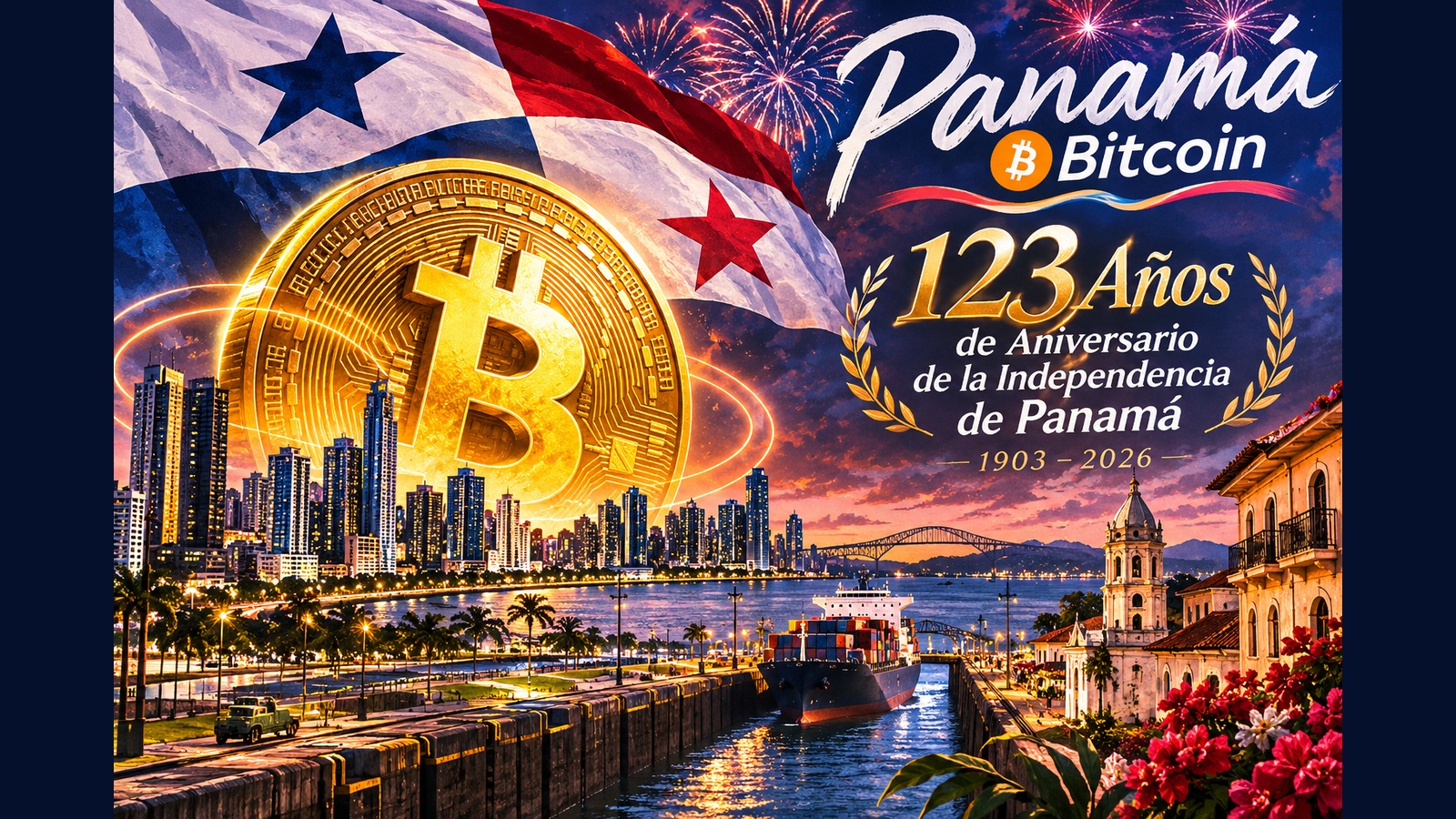
Panama does not need to discover monetary freedom. It was born with it.
Today, November 3, 2026, we celebrate 123 years since our separation from Colombia and the birth of a Republic whose monetary history offers affinities with principles championed by the Bitcoin community today.
This is a celebration of our identity and an invitation to look ahead while remembering how our monetary system took shape.
The Isthmus was already choosing how to trade
Before the Republic, when Panama still formed part of Colombia, international commerce had given the Isthmus a distinctive monetary life.
Panama's National Institute of Statistics and Census describes a period of de facto dollar circulation from 1849 to 1904, linked to travelers crossing the Isthmus during the California Gold Rush. Dollar use continued with the construction of the transisthmian railroad and work on the French canal project.
Panama's economy was already using the dollar before the Republic existed. Trade with the world had established practices that its new institutions would have to recognize.
We can read a lasting lesson in that experience: trust in money grows through its use, acceptance and ability to deliver what it promises.
The balboa: a national unit with an international reference
Through Law 84 of June 28, 1904, Panama established the balboa as its national currency. The official register maintained by Panama's Office of the Attorney General for Administration confirms that date and the recognition of the US gold dollar as legal tender.
The monetary arrangement of 1904 established a nominal one-to-one equivalence between the Panamanian unit and the US dollar of the time. A 1935 Panamanian diplomatic document preserved by the US Department of State records that equivalence and explains that the national unit was named the balboa by the 1904 currency law.
A monetary solution suited to a country connected to the world!
In today's language, we might call the balboa an “analog stablecoin”: a way to explain its value reference through a comparison familiar to people who use digital assets. This is a metaphor, not a historical or technical classification. The balboa was not a token, did not use a blockchain, and we are not claiming that Panama invented the first currency linked to another.
The right to distrust paper money
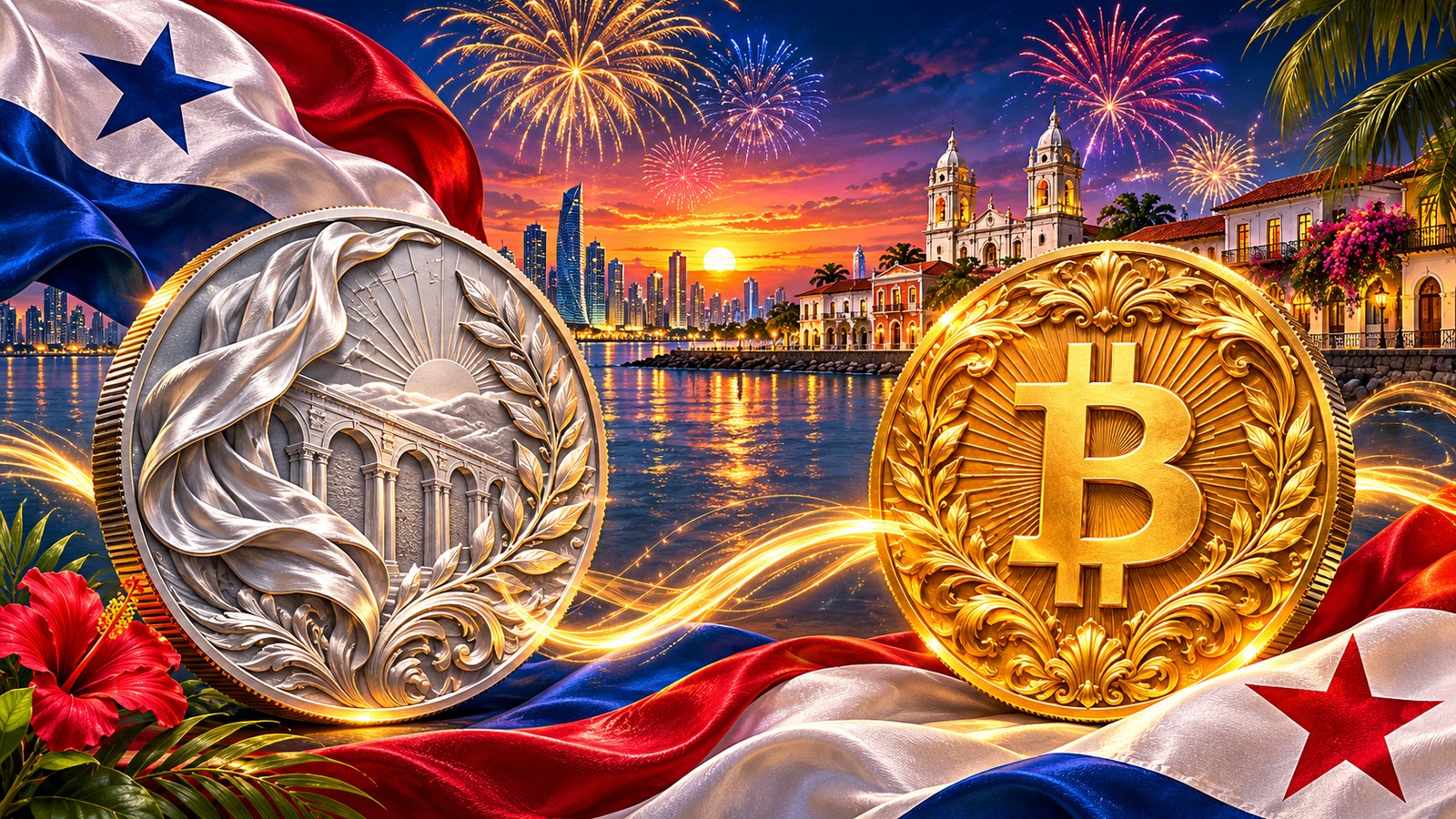
Article 117 of the 1904 Constitution prohibited compulsory-tender paper money. It also recognized that individuals could reject banknotes or other paper instruments that did not inspire confidence, whether issued officially or privately. The provision is reproduced in INEC's monetary history.
The right to reject money we do not trust!
That language belongs in its historical context: it concerned paper money and the rules of issuance and acceptance at the time. It was not a rule about Bitcoin or advance authorization for every digital asset. For this celebration, its importance lies in the weight it gave to confidence and limits on monetary imposition.
Our Republic was born in 1903. The Constitution and currency law discussed here date to 1904, when its first institutions were taking shape.
From our monetary history to the discussion about Bitcoin
Panama's dollarization and Bitcoin are different systems. A shared discussion about trust and limits on monetary power does not make them equivalent.
For Panama Bitcoin, this history opens a conversation that feels close to home: how do we choose the money we use? What do we expect from it? Who controls its issuance, and who retains the ability to spend our funds?
Bitcoin offers another approach to those questions. Our community sees an opportunity to carry forward values it recognizes in Panama's experience: freedom of choice, responsibility and trust earned in practice.
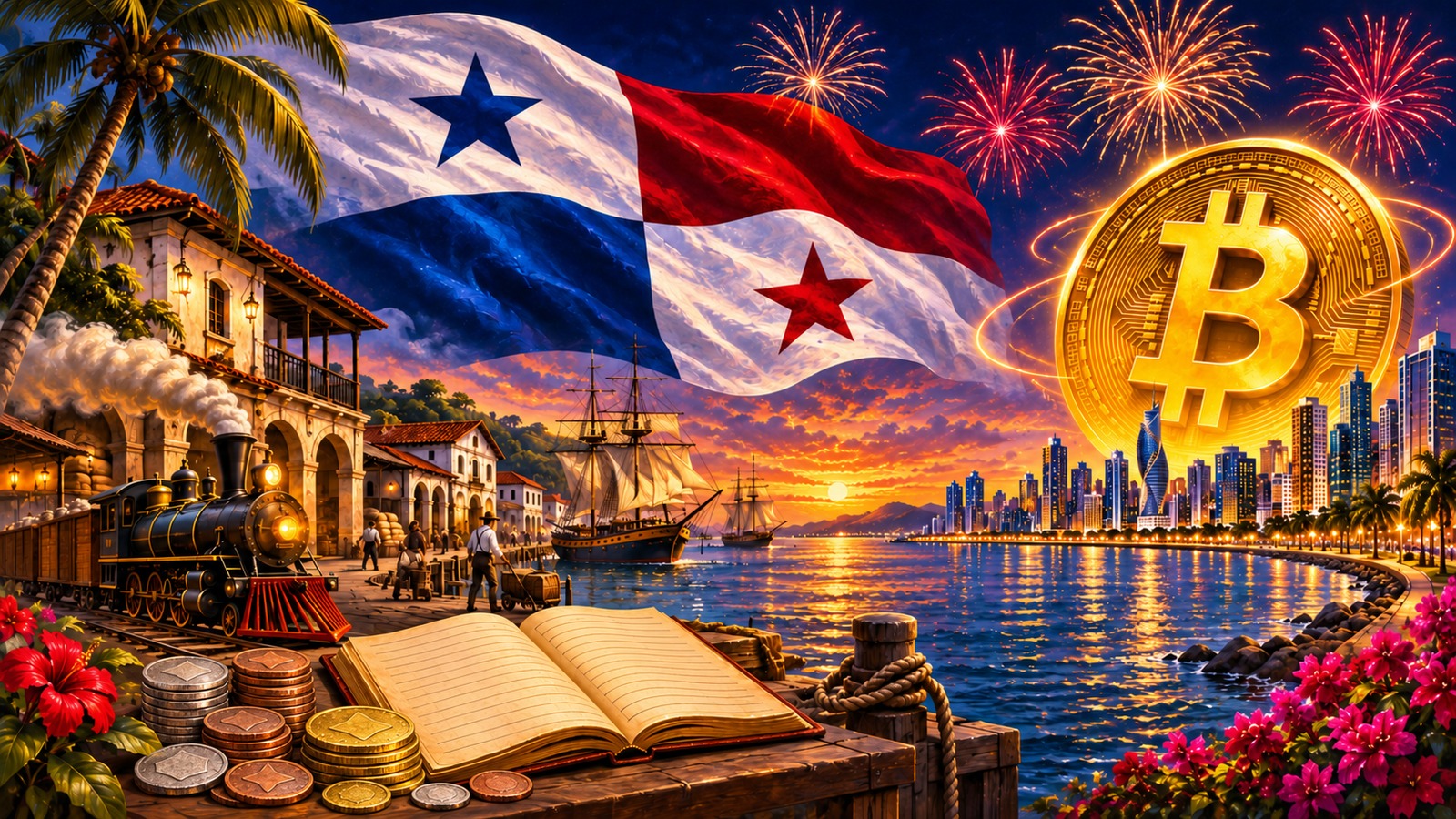
Monetary innovation is not foreign to our national identity. It is part of our history and of the questions we continue to ask as a Republic.
Today we celebrate Panama, its people and the possibility of continuing to build a country open to the world and to new ideas.
🇵🇦 LONG LIVE FREEDOM!
🇵🇦 LONG LIVE PANAMA! 🇵🇦
₿ PANAMA BITCOIN
Adapted from Panama Bitcoin's Instagram publication, with anniversary artwork supplied by the community and historical references to contextualize the text.