
November 5, 2026
Paraguay, Ueno and Bitcoin: a warning for Panama about who controls our money
The Ueno crisis and resignation announcements in Paraguay raise questions for Panama about access to savings, the limits of trust and Bitcoin self-custody education.
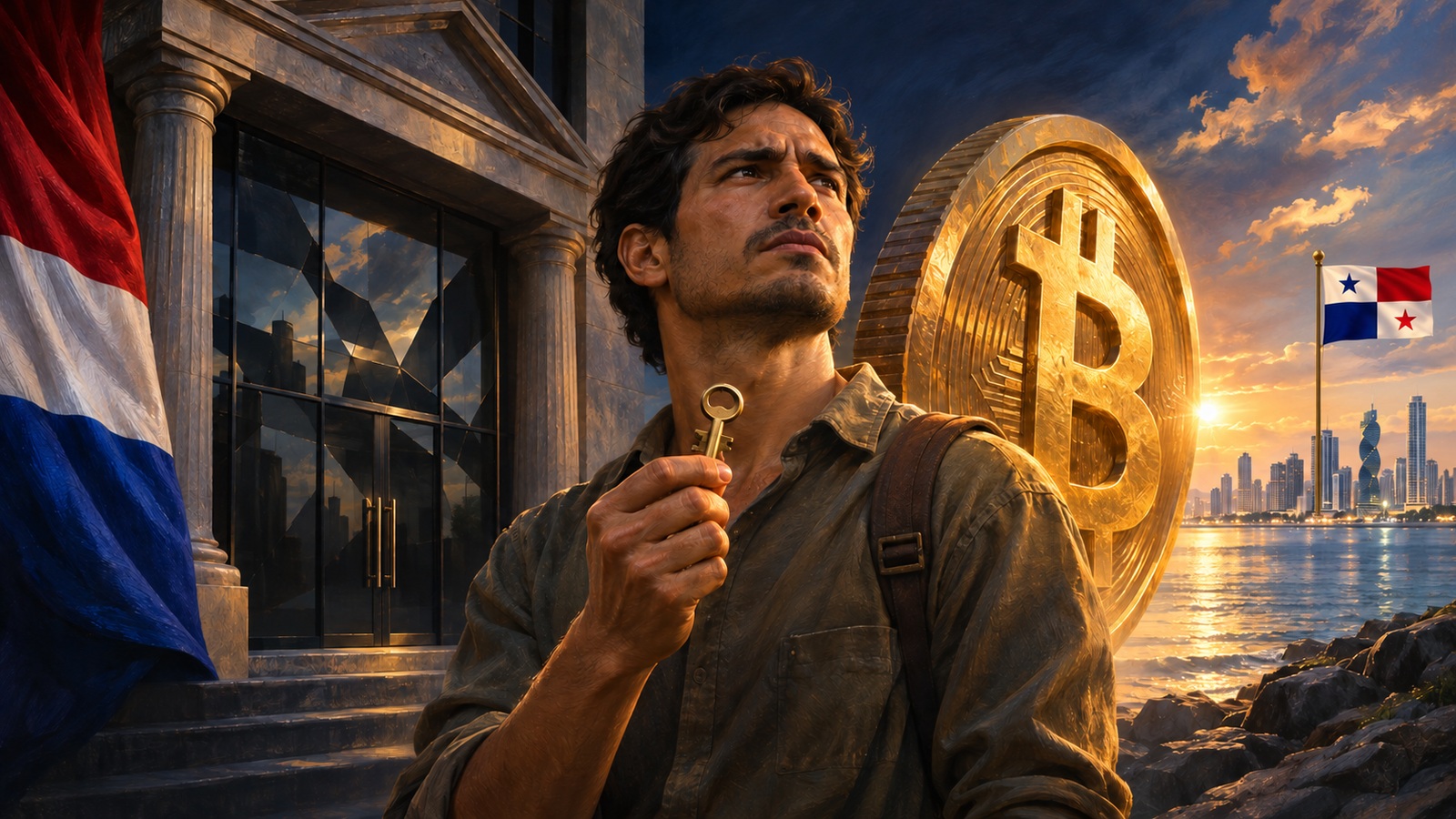
November 5, 2026 | Panama Bitcoin analysis. Developing story.
A bank account can show a balance without allowing its holder to use that money when it is needed. The difference between having a claim to funds and being able to access them is at the center of the Ueno Bank crisis in Paraguay.
For Panama Bitcoin, the response is not to celebrate depositors' distress or promise that a technology removes every risk. It is to take seriously a question that also concerns Panama: how much control do we retain over our assets when we depend entirely on intermediaries?
The banking crisis reached politics
On November 3, the Central Bank of Paraguay announced that its board had decided the previous day to begin Ueno Bank's resolution process. The announcement identified inadequate solvency following adjustments to the bank's financial statements. The decision dates to November 2; its public announcement dates to November 3, 2026.
On November 4, the BCP announced an advance against the deposit guarantee of up to 40 minimum monthly salaries, deducting overdue debts with the bank. The notice provided for payments to begin within 24 hours and be completed within five business days. On November 5, it announced a lookup platform to identify each depositor's assigned receiving institution.
Those measures matter. Restricted access does not demonstrate that all savings have been permanently lost. Nor does announcing a payment mechanism establish that everyone has already received their money.
The crisis also had political consequences. Carlos Carvallo, who had led Financiera Ueno before becoming central bank president, submitted his resignation on November 3, according to EFE and La Nación's coverage the following day. His earlier professional ties to the institution added questions about independence and supervision, without establishing criminal liability by themselves.
On November 5, Santiago Peña announced that he was submitting his resignation as Paraguay's president. CNN en Español reported that Congress had to decide whether to accept it. This article does not assume that the institutional transition has concluded without subsequent confirmation.
Public money, private interests and crony capitalism
Ueno presented itself as a digital bank. But a modern app does not, by itself, explain where the money enabling an institution to grow comes from. In this case, funding from public bodies and pension savings also deserves attention.
On October 29, 2026, Última Hora reported statements by IPS investment director Hugo Díaz: the pension institution's exposure to Ueno had risen from roughly US$20 million, when it operated as a finance company, to US$345 million in the first half of 2026. These were resources intended to support pensions, not the personal wealth of those deciding where to place them.
Those funds supplied financing for the institution's growth. They were not necessarily its only cause: commercial expansion and the absorption of Visión Banco also matter. Díaz argued that placements should be assessed against the bank's changing capital base; IPS financial management denied that its rules had been changed to benefit a particular institution.
Proximity to political power requires precision about the relationships involved. ABC Color documented in April 2025 that Peña appeared with a 1.58% stake in Ueno Holding, consistent with his 2023 asset declaration. That is not the same as establishing direct ownership of Ueno Bank shares. Peña denied having a stake in the bank or a conflict of interest; ABC subsequently reported his exit from the holding's shares in 2025.
Carlos Carvallo's earlier presidency of Financiera Ueno is established. The impeachment accusation reported by ABC Color on November 5 also attributes holdings of Grupo Vázquez bonds to him. Owning bonds, leading a finance company and owning bank shares are different relationships and should not be presented as interchangeable.
That accusation also alleges that the executive favored private interests through regulatory changes and concentration of IPS funds. These are allegations requiring investigation, not judicial findings. In April 2025, the Comptroller's Office had taken the position that Peña's stake did not breach conflict-of-interest rules. That earlier position must be distinguished from the later accusations.
Our editorial criticism is direct: when access to political power is used to steer public resources toward connected businesses, protect privileges or weaken oversight, that is crony capitalism, not a free market. The Ueno case requires establishing whether those boundaries were crossed, who made the decisions and who benefited.
Citizens' property must not become a tool for sustaining political alliances. Workers' money deserves protection against arbitrary decisions, even when decision-makers invoke financial inclusion, modernization or stability.
The Bitcoin question: what incentives lay behind the obstacles?
Paraguay attracted mining companies with its hydroelectric power and the prospect of developing competitive projects. Expectations of a favorable environment brought investment, followed by decisions that parts of the industry saw as changes to the rules.
HIVE's experience makes that tension concrete. In its July 31, 2024 announcement, the company announced agreements for a 100 MW project but said it had rejected another 150 MW because of unexpected policy changes, tariff uncertainty and contractual conditions. Its own statement also acknowledged constructive meetings with officials: the relationship combined investment openings and subsequent obstacles, rather than a blanket ban on all Bitcoin-related activity.
ANDE Resolution 49238, dated June 26, 2024, updated tariffs for its special intensive-consumption group. ABC Color reported on July 19 that Peña defended the increase and played down its impact on the business; legal miners challenged his arguments and complained about legal uncertainty. There was also legislative discussion of a temporary prohibition, which should not be confused with an enacted general ban.
The political question is why the development of an alternative faced obstacles while a banking business connected to people close to political power received substantial public funds. Peña's and Carvallo's business backgrounds, together with Ueno's public funding, make it relevant to examine the incentives of those deciding which activities deserve support and which must bear new burdens.
From our Bitcoin perspective, this contrast supports a critical interpretation: ties to traditional intermediation can create incentives to preserve privileges and resist alternatives that expand users' control. Self-custody challenges precisely the dependence on another party to use one's money. The regulator's interests and the citizen's interests should therefore not be presumed identical.
This is an editorial interpretation of incentives and the potential conflict between public and private interests. It does not replace investigation of particular decisions or turn every energy measure into proof of a personal motive. But monetary and regulatory policy should not be treated as though it were decided in a vacuum, separate from the businesses and relationships of those exercising power. That is the cronyism problem this case requires us to discuss.
Panama is not immune
It would be a mistake to watch from Panama as though distance protected us. A developed banking system and the use of the dollar do not make an institution immune to solvency, liquidity, governance or operational-continuity problems.
This is not an accusation against a particular Panamanian bank or a claim that there is a current local crisis. In fact, Panama's banking supervisor highlighted the strength of the International Banking Center in the first half of 2026. Aggregate strength and zero risk are different things.
Depositors should understand an institutional distinction. In January 2026, the World Bank described Panama as lacking a general deposit-insurance system. An IMF technical report hosted by the banking supervisor distinguishes the explicit state guarantees benefiting Banco Nacional de Panamá and Caja de Ahorros. That does not mean all banks have identical protection or that any deposit has an immediate, unconditional repayment guarantee.
Local history also warrants care. Resolution SBP-0016-2017 documents the impact on Balboa Bank & Trust's liquidity after its addition to the OFAC list in May 2016, and the subsequent control and reorganization measures. This was a different case from Ueno, but institutional disruption is not exclusively a foreign possibility.
Traditional banks must earn confidence through clear information and responsible management. Digitizing an account does not replace transparency about how deposits are managed. A modern app cannot, by itself, answer what happens when a customer needs to withdraw and the institution cannot meet that request.
Users should ask questions too. What risk are we taking? What protection actually exists? What procedure applies if an institution stops operating? Do we have another way to pay essential expenses while a problem is resolved?
Those questions deserve answers before an emergency.
What Bitcoin self-custody changes
A bank deposit depends on an institution's capacity and obligations toward its customer. With Bitcoin self-custody, the user retains the keys needed to authorize spending their coins.
These are different legal relationships and risk models. Holding Bitcoin on a custodial exchange is not the same as controlling its keys: access still depends on an intermediary.
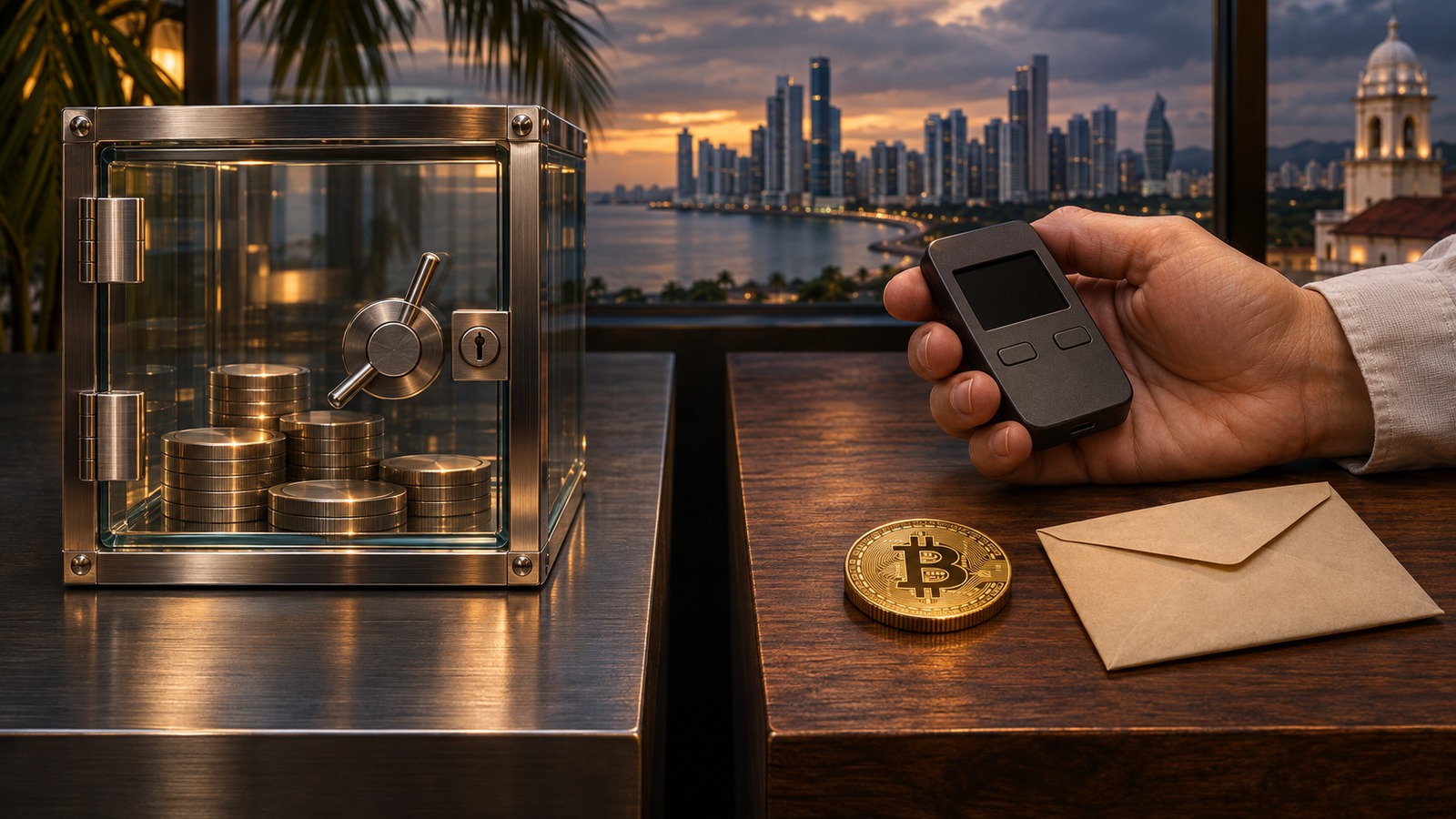
Self-custody can reduce dependence on a financial custodian, but it transfers responsibilities to the user. Losing keys or exposing a recovery seed can cause irreversible losses. Bitcoin's price is volatile; transaction fees and connectivity also affect its use. A hardware device does not replace a protected backup and tested recovery.
Bitcoin does not, by itself, offer the same price stability, services or complaint mechanisms as a bank account. We are not proposing that people empty accounts out of fear or convert emergency savings into a volatile asset. We propose learning to distinguish the tools before deciding how to use them.
Education before slogans
At Panama Bitcoin, we encourage people to take time to understand this technology. The aim is to put decision-making power in users' hands, rather than exclusively in the hands of banking intermediaries or political actors.
Learning can start without large amounts:
- Distinguish a self-custody wallet from an account at a custodial service.
- Understand what a private key and recovery seed allow someone to do.
- Practice transfers and recovery with small amounts before committing substantial funds.
- Recognize scams, and never share seeds, passwords or remote access with supposed advisers.
- Decide how backups will be protected and who can act if the owner is unavailable.
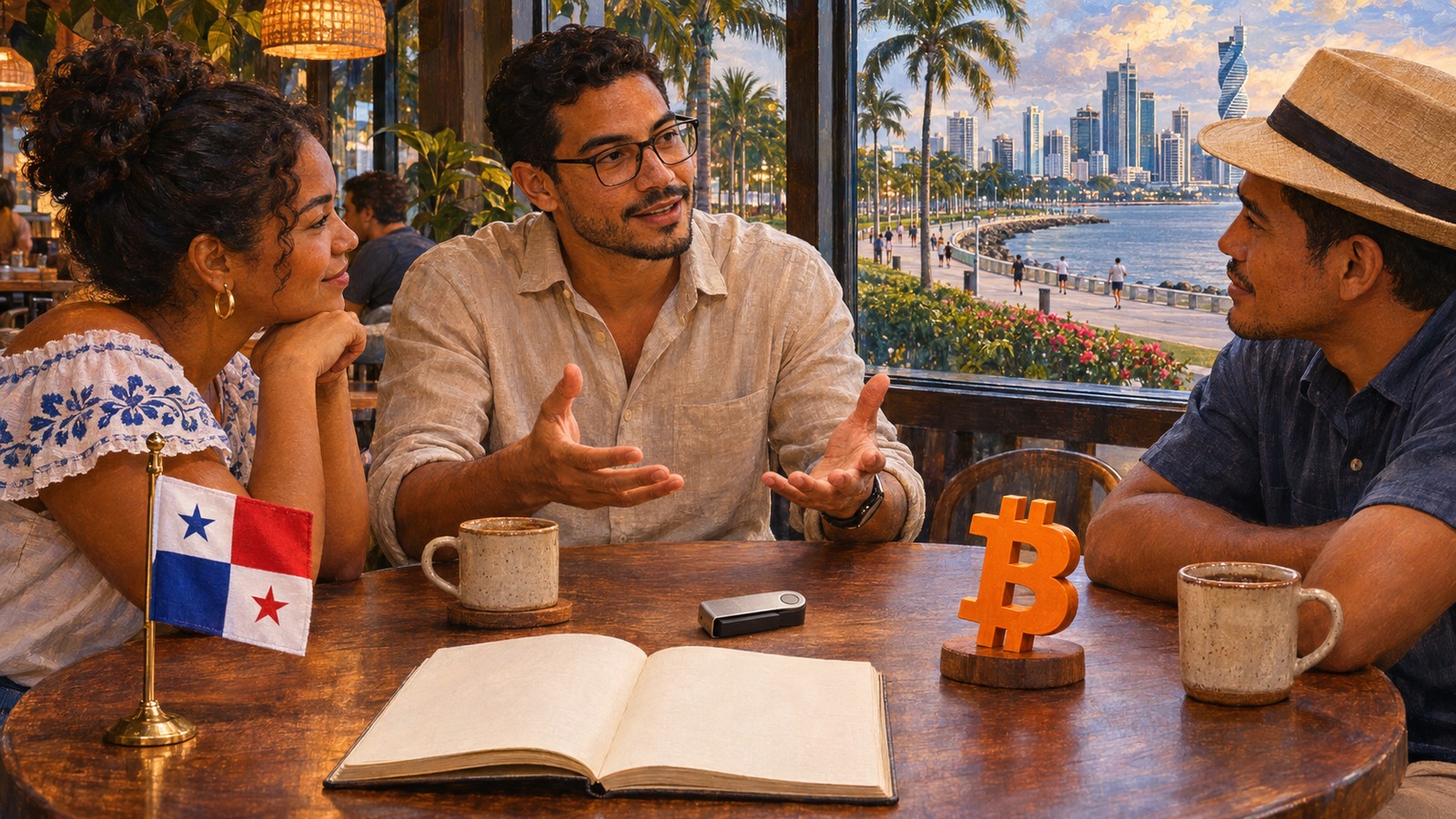
Learning does not oblige anyone to buy. It does not require abandoning the banking system either. It makes comparison more informed and helps separate convenience from absence of risk.
Trust also needs limits
Banking supervision and resolution mechanisms matter. They can protect rights and organize a response to a crisis. That does not mean they guarantee immediate access to a balance during every disruption.
The lesson for Panama is not that every bank will fail or that Bitcoin is an automatic solution. It is that concentrating our ability to transact in one institution requires trust worth examining.
Monetary sovereignty begins with understanding what we own, how it is held and whom we depend on to use it. It continues with the ability to choose.
It is not enough for money to appear on a screen. It matters who has the power to let us use it.
Subscribe to Panama Bitcoin and join a conversation about Bitcoin that starts with education, not promises.